There are very few truly forgotten characters in One Piece.
Give the fandom enough time and someone will explain why a character who appeared for eleven minutes twenty years ago is actually essential to understanding the entire series.
But as I thought about this list, I realized being forgotten wasn't really what I was looking for.
I was more interested in the characters we remember, but maybe don't fully appreciate. The ones who did something important without necessarily getting the moment people remember. The characters who changed how we understood someone else. Or the ones whose presence made an island, conflict or relationship feel completely different.
And eventually I kept coming back to one question:
If I removed this character, would One Piece feel different?
Not necessarily whether the plot could technically continue. Oda could obviously find another way to move characters from one place to another. I mean something a little different.
Would we understand Nami the same way? Would Skypiea feel like the same conflict? Would the Marines mean the same thing? Would an emotional moment still hit as hard?
And maybe most importantly: did this character contribute something significant that we rarely give them credit for?
That changed my list quite a bit.
So these aren't the ten best side characters from pre-timeskip One Piece. Some of the best characters from this era aren't here at all. They're the ten characters whose contribution, as I look back on pre-timeskip now, feels bigger than the amount we tend to talk about it.

10. Conis
The person who showed us what living under Enel actually meant
When I first watched Skypiea, I don't remember thinking much about Conis. Compared with Enel, Wyper or even Gan Fall, she didn't exactly demand your attention.
Looking back, I think that's part of what makes her interesting. Conis is ordinary, and because she's ordinary, we get to see Enel's rule from a perspective the warriors can't really give us.
When she betrays the Straw Hats, it's easy to see it simply as fear. But that's how Enel's system works. People believe he can hear them. Helping the wrong person can condemn you. Eventually, people start policing themselves.
Conis eventually chooses to warn everyone anyway. She doesn't defeat Enel or suddenly become fearless. She just reaches a point where fear isn't enough to keep her quiet anymore.
Skypiea doesn't fall apart without Conis. But Enel's rule looks different without her. Wyper shows us the people fighting against the system. Conis shows us what it was like for everyone who had learned to live inside it.
Ranking: 41/50
9. Kokoro
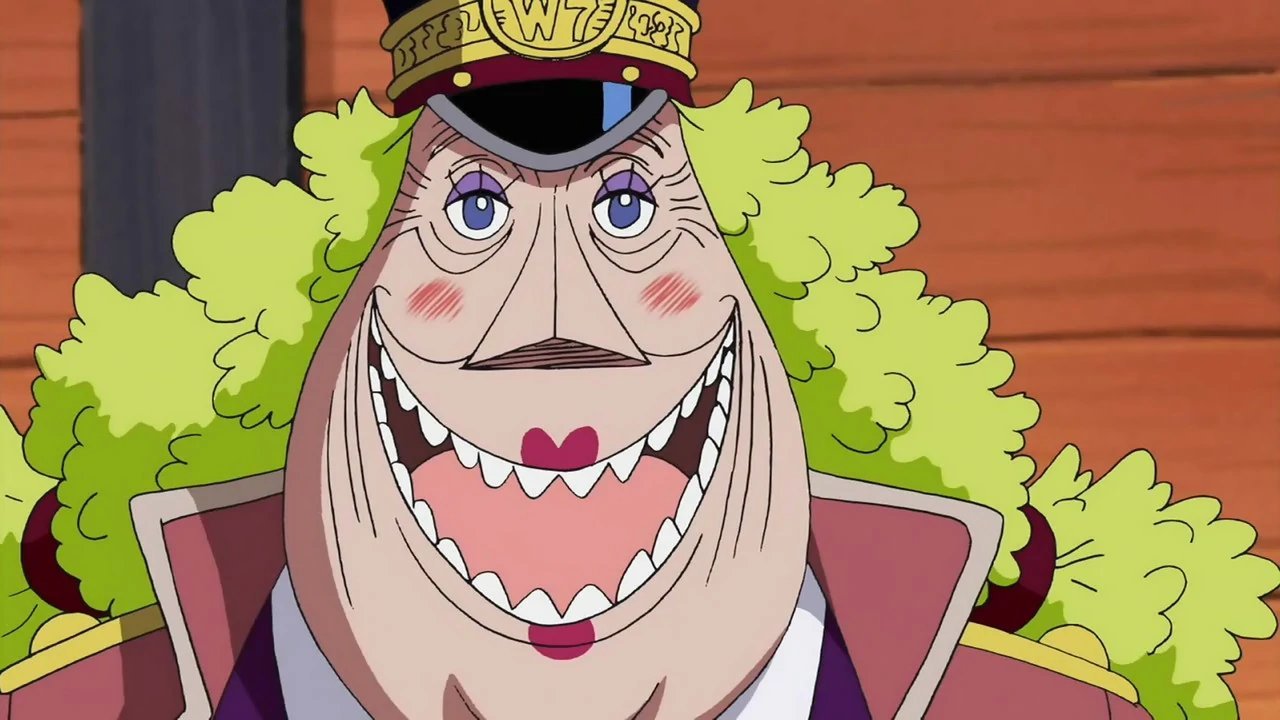
The woman who quietly connects generations of Water 7
Kokoro is almost designed to be underestimated. She's drunk, strange and funny - and then you slowly realize how much history is sitting beside that train station.
She knew Tom. She knew Iceburg and Franky when they were young. She watched the Sea Train become real. She lived through the events that eventually shaped almost everything happening when the Straw Hats arrive.
The first time through, I mostly enjoyed Kokoro whenever she appeared. Looking back, I appreciate her for a different reason: she makes Water 7's history feel continuous.
Tom's story isn't simply something that happened in a flashback. Someone who lived through it is still sitting there. She remembers those boys before they became Iceburg and Franky. She remembers Water 7 before it became the city we see.
Remove Kokoro and most of the mechanics can be rewritten. But Water 7 loses some of the feeling that its past never really went anywhere.
Ranking: 41/50
8. Dorry & Brogy
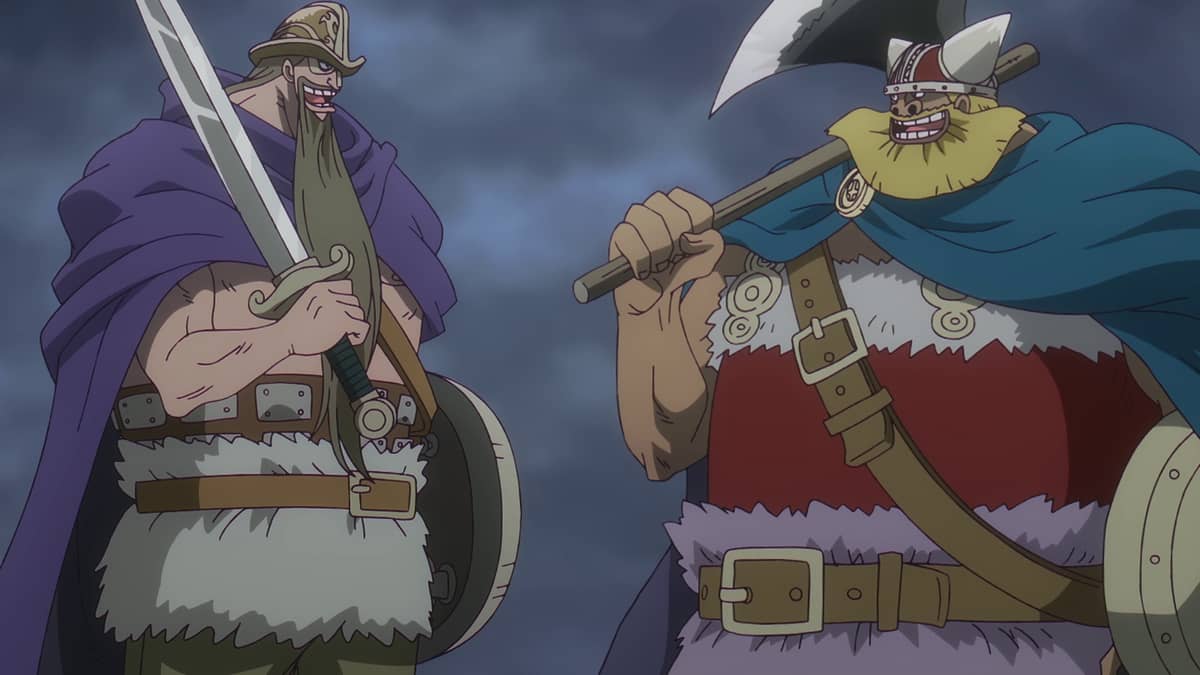
Two ridiculous giants who taught us something surprisingly important
Two giants have been fighting for a hundred years because neither remembers whose catch was bigger.
It should be stupid. And it is. That's part of why I love it.
But the more One Piece I watched, the more Dorry and Brogy started to feel like an early version of something the series would return to again and again: their fight doesn't need to make sense to us. It makes sense to them.
Eventually, the original argument barely matters. The promise does. Their pride does. Their friendship does. And One Piece takes that completely seriously.
Luffy constantly meets people whose dreams and values look ridiculous from the outside. He rarely asks whether those things are reasonable. He understands that they matter to the person pursuing them.
I don't think Dorry and Brogy single-handedly establish that philosophy. But looking back, they feel like one of its earliest expressions.
They're ridiculous. Their conviction isn't.
Ranking: 41/50
7. Bellamy
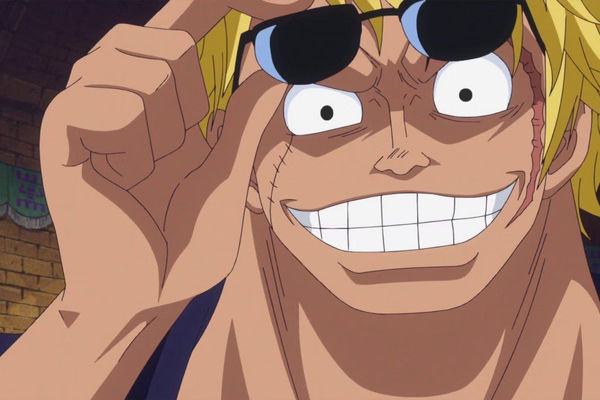
The pirate who showed us what Luffy wasn't
Everyone remembers the punch.
But as I think back on Jaya, I think Bellamy's most important contribution happens before Luffy ever hits him.
Bellamy laughs at dreams. He laughs at Sky Island. He represents a version of piracy where the romantic idea of adventure has become embarrassing. And Luffy refuses to fight him.
That matters. Bellamy insulting Luffy's dream doesn't actually threaten the dream. Luffy doesn't need Bellamy to believe him.
Then Blackbeard appears. Bellamy believes the age of dreams is over. Blackbeard tells us people's dreams never end. Luffy exists somewhere between those ideas without needing to explain himself.
I originally remembered Bellamy as the guy I desperately wanted Luffy to punch. Looking back, I appreciate him much more as a character who helps define what kind of pirate Luffy actually is.
The punch is memorable. Everything leading up to it deserves more credit.
Ranking: 42/50
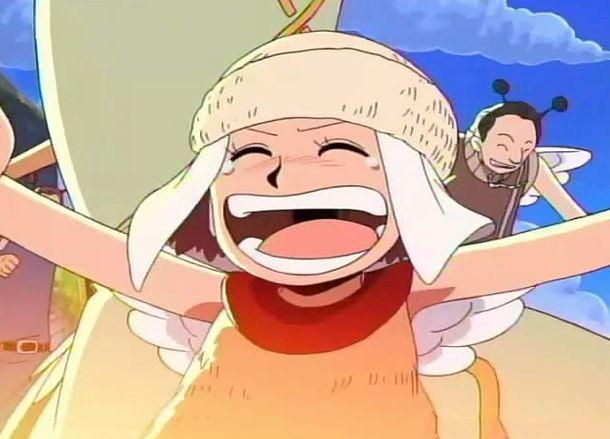
6. Aisa
The child who inherited a war she never started
Wyper makes the Shandian conflict easy to understand. His people lost their homeland, generations fought to reclaim it, and he inherited that responsibility.
Aisa makes me think about the same conflict differently.
She didn't lose Shandora. She didn't make the original promises. She didn't create the conflict. She was simply born into it.
Because of her Mantra, the violence around her becomes something she experiences unusually directly. She can feel people disappearing.
The first time through Skypiea, I don't think I gave that perspective enough weight. Looking back, Aisa makes me think less about why the Shandians are fighting and more about what happens when a conflict lasts long enough that children begin inheriting it.
Wyper can tell us why the fight continues. Aisa makes us wonder what it means that it still hasn't ended.
Skypiea could be rewritten without her. I don't think the conflict would feel exactly the same.
Ranking: 43/50

5. Tashigi
The Marine who made justice more complicated
For a long time, the thing I associated most with Tashigi was Zoro. She looks like Kuina, challenges him, and forces something from his past back into his present.
The more I thought about this list, though, the less I thought that was her strongest argument. I think it's Alabasta.
Tashigi genuinely seems to believe the Marine uniform is supposed to mean something. Then she watches a Warlord protected by the system help tear apart a country while pirates become the people trying to save it.
Smoker understands the contradiction too, but Tashigi gives us something slightly different. She's still figuring out what justice actually means.
Without characters like her, it would be easier to understand the Marines as simply another group standing against Luffy. Tashigi reminds us there are people inside the institution who sincerely want to protect others, even when the institution doesn't live up to the same idea of justice they do.
As I watched more One Piece, that contradiction became much more important. Looking back, Tashigi was helping establish it surprisingly early.
Ranking: 43/50
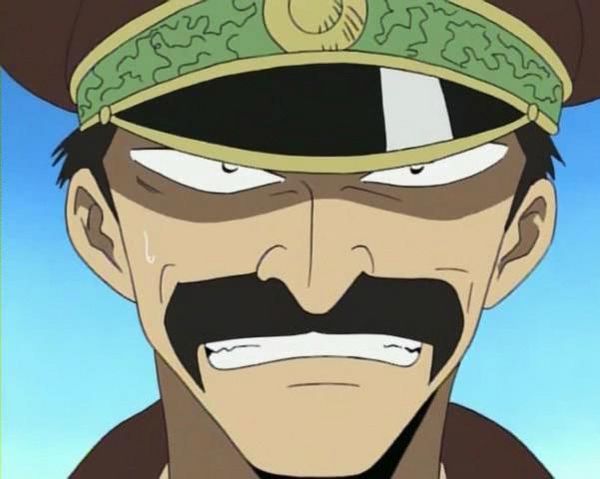
4. Genzo
The man who quietly shows us that Nami still had a father
Genzo's pinwheel might be one of my favourite tiny details in East Blue.
Baby Nami was frightened by his face, so he put something ridiculous on his head to make her laugh.
It's such a small thing. But as I reflect on Arlong Park, I think it tells us almost everything we need to know about him.
Belle-mère dies, but Nami and Nojiko don't suddenly stop having a family. Their family changes. Cocoyasi Village becomes part of it. Genzo becomes part of it.
That changes the way I see what Nami spends those years trying to accomplish. She's not simply trying to save a village. She's trying to save her people.
Then Arlong is defeated, Nami is leaving, and Genzo asks Luffy not to take away her smile. The first time I watched it, I thought it was sweet. Looking back, it feels much more like a father watching his daughter leave home.
You could remove Genzo and preserve most of Arlong Park's plot. But Nami's relationship with Cocoyasi would become less personal. For an arc built around how much that village means to her, that's a significant thing to lose.
Ranking: 44/50
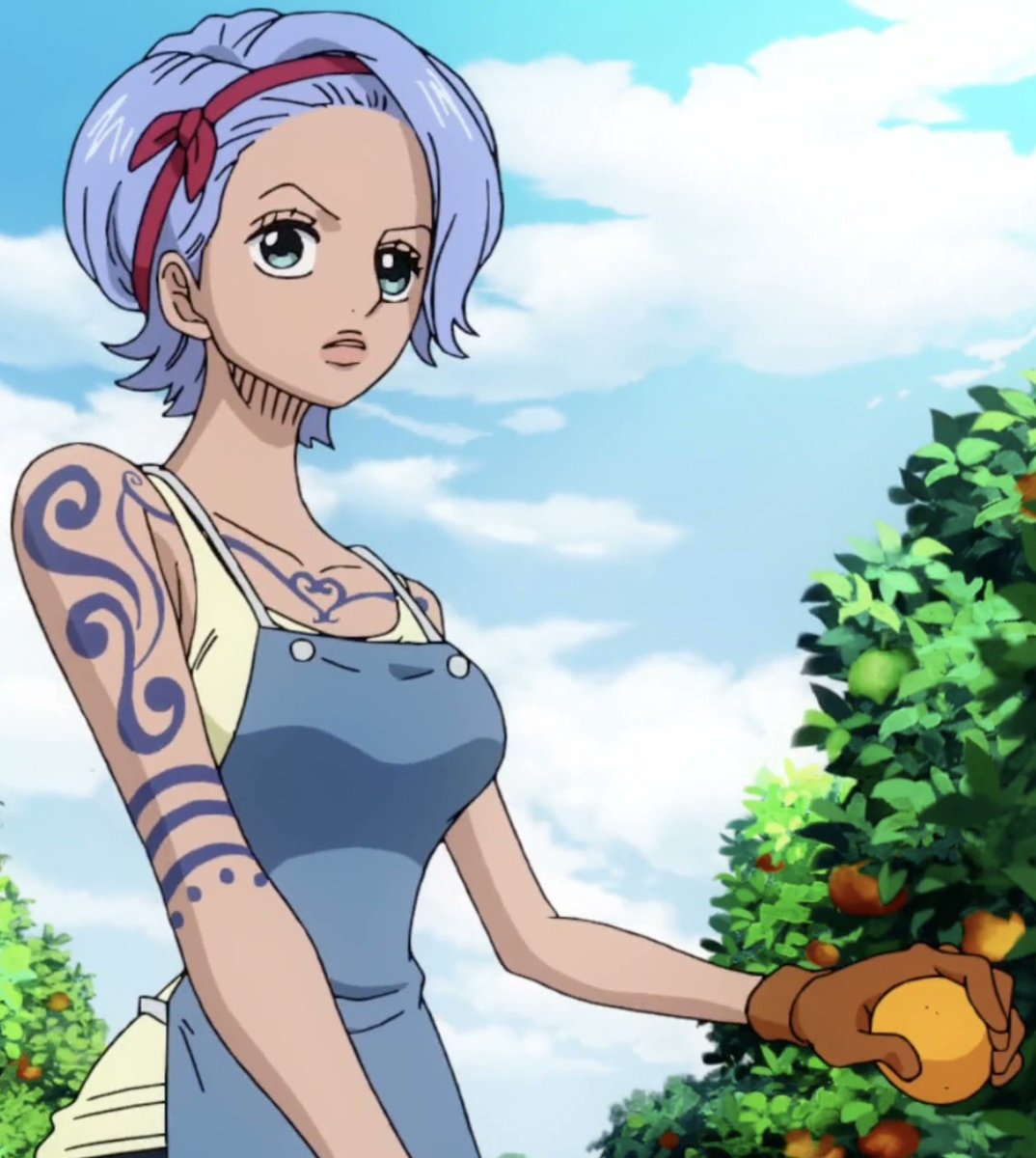
3. Nojiko
The person who helps us understand Nami without Nami having to explain herself
Nojiko became much more interesting to me when I asked the removal question.
Could Arlong Park happen without her? Technically, probably. But someone would have to replace an enormous part of what she gives us.
Nojiko doesn't simply know Nami's story. It was her story too.
Belle-mère was her mother. Arlong destroyed her home. She grew up under the same occupation. Eventually she understands what Nami is doing, and then has to participate in one of the saddest parts of the situation: letting her sister believe she's hated because telling her the truth would make the burden even harder.
That's what I think I underappreciated the first time. Nami believes she's carrying the village alone. But people around her have quietly been carrying her.
There's also something I love about the way the story uses Nojiko. Luffy refuses to hear Nami's history. He doesn't need an explanation before deciding whether he trusts her.
But we do.
Nojiko isn't really explaining Nami to Luffy. She's explaining Nami to us. Remove her and we can still understand what happened. I don't think we understand it in quite the same way.
Ranking: 44/50

2. Mont Blanc Cricket
The man waiting centuries later for someone else's story to be proven true
There are bigger characters in Jaya. There are stronger characters. There are certainly more important characters to the overall story.
But I'm not sure there are many characters who feel more One Piece to me than Mont Blanc Cricket.
Cricket spends his life chasing something that isn't even really his dream. Noland died centuries before he was born, branded a liar, and somehow that humiliation survived him. His descendants inherited it.
The more I think about Cricket, the more I realize his search isn't really about treasure. It's about whether a person's truth can survive long enough for someone else to find it.
Then Luffy reaches Skypiea and the Golden Bell rings.
That moment already works as a victory. Cricket changes what the victory means.
Noland wasn't lying. The city existed. The story was true. Neither Noland nor Calgara lived long enough to see that misunderstanding resolved. Cricket did.
I remember the bell as one of Skypiea's great emotional moments. But as I reflect on why it works, Cricket becomes impossible for me to separate from it.
Without him, the bell still matters. With him, it reaches across centuries.
Ranking: 47/50

1. Wyper
The character who reminds us that Skypiea was never really Luffy's conflict
Wyper wasn't always the obvious number one to me. But every time I tested the list, I kept coming back to him.
I think it's because of something I didn't fully appreciate the first time I watched Skypiea: Luffy barely matters to Wyper's story.
The Straw Hats arrive in the middle of something. Wyper's people were already fighting. Their history, anger and loss already existed. Generations had already lived and died carrying that history before Luffy ever rode the Knock Up Stream.
Wyper doesn't exist because Luffy needs another ally. He doesn't immediately trust him. He has his own fight.
Looking back, that changes the entire feeling of Skypiea for me. The island doesn't feel like it was waiting for Luffy to arrive and begin the story. Luffy walked into someone else's.
Even Wyper's aggression makes more sense through that lens. Why should someone carrying generations of dispossession immediately trust another group of outsiders?
Then he learns what happened to Shandora. The city his ancestors died protecting wasn't destroyed. They protected it. They succeeded.
Wyper inherited a struggle without knowing its ending.
The more One Piece I've watched, the more familiar that idea feels. History gets lost. Stories change. Promises survive the people who made them. People inherit conflicts without completely understanding how they began.
Remove Wyper and you could still make a version of Skypiea. Luffy could still fight Enel. The bell could still ring.
But without Wyper, Skypiea becomes much easier to see as Luffy's adventure. With him, we're reminded that the Straw Hats are visitors in a world filled with stories that began long before they arrived.
Looking back at pre-timeskip One Piece, I think very few characters contributed more to that feeling while receiving less credit for it.
Ranking: 47/50
Special Mentions
Gan Fall — A strong perspective on leadership and what comes after generations of conflict, but Aisa and Conis ultimately gave me viewpoints on Skypiea that felt harder to replace.
Dalton — I appreciate his contrast with Wapol more looking back: one possesses authority while the other slowly becomes worthy of it. He just misses the ten on overall narrative necessity.
Johnny & Yosaku — Originally #10. I still love how they make East Blue feel more populated - Zoro knew people before Luffy, bounty hunters travelled the seas, information moved between islands - but the removal test hurt them.
Paulie & Iceburg — Both make Water 7 richer. Paulie helps Galley-La feel like a genuine community; Iceburg carries Tom's history forward and channels it into building rather than destruction. Neither quite displaced the final ten.
Kaya & T-Bone — Kaya matters to Usopp's beginning and the Going Merry; T-Bone gives us an early glimpse of a Marine who genuinely cares about ordinary people and his subordinates. Both are good examples of small roles adding texture to the larger world.
Camie — A useful test case. Her kidnapping triggers enormous events at Sabaody, but much of that importance comes from what happens to her rather than what her characterization uniquely contributes. Plot importance and character importance aren't always the same thing.
Deliberate exclusions: Bon Clay, Vivi, Hiriluk, Kureha, Noland and Calgara are all characters I could make strong arguments for, but I don't think they're truly underappreciated. Being great isn't enough for this list; the gap between contribution and appreciation is what matters.
The characters around the story
The thing I like most about this list is something I didn't really intend when I started it.
Most of these characters remind us that life in One Piece doesn't begin when Luffy arrives.
Wyper was already fighting a war. Cricket had already spent years searching. Nojiko and Genzo had already spent years loving Nami in ways she didn't completely understand. Aisa was born into consequences created generations before her. Kokoro had already watched one generation of Water 7 grow up.
When I first watched pre-timeskip One Piece, I naturally followed the Straw Hats. They were the journey. But as I watched more of the series, I started appreciating the characters at the edges differently.
They're often the people who convince us that an island didn't begin when the Straw Hats landed there. Someone was already grieving. Someone was already fighting. Someone had made a promise. Someone had failed. Someone had been waiting.
The biggest characters give us the story. Characters like these convince me there's a world surrounding it.
And the longer I've spent with One Piece, the more I think that's one of the reasons its world has stayed with me.
Final Ranking & Scorecard
The scores are a way of testing the ranking, not pretending it is scientific. They force each choice to answer the same questions: impact, what changes without them, what perspective they add, whether they own an underappreciated moment, and how large the gap is between their contribution and the credit they receive.
1. Wyper — Impact 9 · Removal 9 · Perspective 10 · Moment 9 · 47/50
2. Mont Blanc Cricket — Impact 9 · Removal 9 · Perspective 10 · Moment 10 · 47/50
3. Nojiko — Impact 8 · Removal 8 · Perspective 10 · Moment 9 · 44/50
4. Genzo — Impact 8 · Removal 8 · Perspective 9 · Moment 10 · 44/50
5. Tashigi — Impact 8 · Removal 8 · Perspective 10 · Moment 9 · 43/50
6. Aisa — Impact 7 · Removal 7 · Perspective 10 · Moment 9 · 43/50
7. Bellamy — Impact 8 · Removal 8 · Perspective 10 · Moment 8 · 42/50
8. Dorry & Brogy — Impact 8 · Removal 8 · Perspective 9 · Moment 8 · 41/50
9. Kokoro — Impact 8 · Removal 8 · Perspective 9 · Moment 7 · 41/50
10. Conis — Impact 7 · Removal 7 · Perspective 9 · Moment 9 · 41/50